
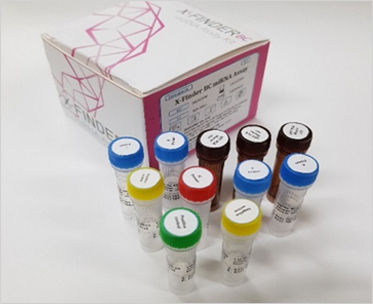
The NMPA issued the “Technical Review Points for Tumor Gene Variation Detection Reagents (Trial)” on June 15, 2026. This guidance covers NGS‑based IVD reagents for tumor mutations, which are essential for guiding targeted therapy and accelerating drug development through high‑throughput multiplexing. Large‑panel tests are increasingly demanded for parallel detection and rapid target updates. Liquid biopsy has made plasma samples critical, especially for patients with resistance or progression, as a valuable complement to tissue biopsy.
For Performance Evaluation Guideline on Tumor Mutation Reagents, click HERE
For our service page on IVDs, click HERE
Click HERE for reviewer’s opinion on colorectal cancer detection kit
The following is the summary and interpretation of the key provisions.
Scope of Application
The review points apply to IVD reagents intended for the qualitative in vitro detection of tumor-related gene variations in human solid tumor samples—specifically, formalin-fixed paraffin-embedded (FFPE) tissue and/or plasma specimens. These reagents detect a variety of solid tumor-associated genetic alterations and are intended for uses such as companion diagnostics (CDx) for anti-tumor drugs and guidance of cancer therapy.
The guidance is written primarily for tissue- and plasma-based assays for solid tumors. It does not cover hematologic malignancies (due to significant biological and technical differences) or emerging sample types such as urine or ascites (due to insufficient research). While focused on NGS-based products, some sections—particularly those concerning clinical validation pathways for non-original CDx reagents—are also applicable to other molecular methods like PCR.
Large Panel Design and Handling of Tertiary Variants
The review points acknowledge that NGS-based large panel tests, small panel tests, and single-gene tests each have distinct clinical application scenarios. A key feature of large panels is the inclusion of tertiary variants—genetic alterations with currently uncertain clinical significance, lacking uniform consensus. The primary rationale for including tertiary variants is to preserve the product’s expandability, thereby retaining the ability to rapidly meet emerging clinical needs.
However, because the interpretation of tertiary variants remains uncertain in current clinical practice and carries uncontrollable risks, the Document explicitly states that specific genes and variants designated as tertiary shall not be included in the product’s labeling (instructions for use). Moreover, tertiary variant results must not appear in clinical reports provided to physicians or patients.
Applicants are required to list, in the product technical specifications, all information related to tertiary variants: genes, exons, probes/primers, and types of variants included. If sufficient clinical evidence becomes available in the future, product upgrades can be pursued through a registration change. This approach—technical traceability without clinical output—preserves the expandability of detection targets while preventing low-evidence information from interfering with clinical decisions.
Performance Requirements for Tertiary Variants
Since tertiary variants are not claimed under the product’s intended use, and their results are not reported or interpreted clinically, the Document adopts a risk-benefit and minimum-burden principle. Consequently, performance evaluation of tertiary variants is only required during analytical performance studies; it does not need to be assessed in clinical trials.
This differentiated requirement—compared to CDx variants (primary) and secondary variants—does not imply fragmentation of the product. All evaluations are performed on the finalized large-panel design and reaction system. By tailoring requirements according to risk, the Document ensures both safety and effectiveness (preserving assay integrity) while reducing unnecessary burdens on manufacturers. This facilitates the timely market entry of innovative large-panel products for clinical benefit.
Complex Genetic Variations (TMB, MSI)
For large-panel products intended for the same clinical scenarios, beyond single-gene variants, they may also include complex genetic variation and algorithmic analyses such as tumor mutational burden (TMB) and microsatellite instability (MSI). Both nonclinical and clinical studies must fully evaluate these features based on their unique characteristics and clinical significance.
Multi-Cancer Gene Variation Panels
Current research shows that while the optimal gene variant combinations differ across tumor types, there is considerable overlap, and the tumor types targeted by driver genes may expand. Therefore, the Document permits combining detection of gene variations for different solid tumors, as well as pan-solid-tumor and single-solid-tumor assays, into a single registration unit. However, for all indications claimed under the product’s intended use, CDx variants must be included. For tertiary variants, to ensure future expandability to other cancer types, they need not be limited to the indications explicitly claimed.
Registration Unit: Tissue vs. Plasma ctDNA Detection
Typically, tissue is the ideal sample type for tumor gene variation detection. However, for advanced cancer patients or those with resistance/disease progression after treatment, adequate tissue samples may be unavailable. Plasma ctDNA testing becomes a critical alternative. NGS, with its ultra-high sequencing depth, enables accurate detection of tumor gene variations in plasma.
The Document notes significant differences between tissue-based and plasma ctDNA-based assays in terms of gene variant panels, sequencing depth, nucleic acid input, and bioinformatics pipelines. Therefore, the technical routes and focuses differ considerably. In principle, tissue and plasma ctDNA assays should be designed as separate registration units. This is especially true for large-panel tests—they should not claim suitability for both sample types in one registration unit.
For certain small-panel products primarily intended for tissue, if a specific variant has direct plasma CDx evidence (e.g., developed alongside an anti-tumor drug or bridged to a clinical trial assay), that variant’s plasma use may be claimed within the same registration unit. However, manufacturers cannot arbitrarily extend plasma claims to other variants in that unit. The instructions for use must clearly detail which variants are detected in each sample type, and clinical reports must be issued separately for tissue and plasma testing.
Clinical Pathway for Non-Original Companion Diagnostic Reagents
For non-original (i.e., not codeveloped with the drug) gene-based CDx reagents, the Document outlines three pathways to establish clinical significance:
– Bridging studies
– Observational studies of anti-tumor drug efficacy in marketed use
– Consistency comparison with an original CDx reagent (termed “original CDx comparison”)
Previous guidance listed specific variants eligible for the original CDx comparison pathway; all others required bridging studies or observational studies. The Document expands the scope of the original CDx comparison pathway. For any non-original CDx reagent whose coverage of variant loci and types shows good consistency with an original CDx reagent, the consistency comparison method may be used to confirm clinical significance. If high concordance is demonstrated, no additional drug efficacy correlation study is required.
Important conditions:
– The comparator must be an original CDx reagent that is already marketed in China. Clinical trial assays (CTAs) cannot serve as comparators.
– For anti-tumor drugs marketed for many years without a codeveloped or bridged original CDx reagent available in China, an original CDx reagent approved overseas may be used as comparator.