
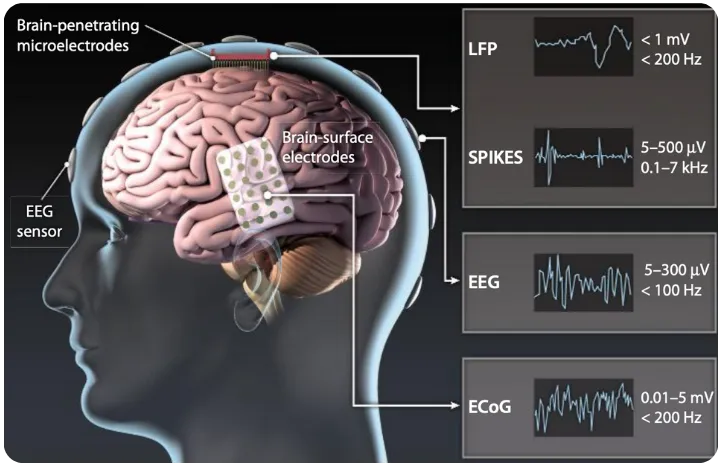
The NMPA issued “Guideline on Product Classification of Brain-Computer Interface (BCI) Medical Devices” and “Guideline on Nomenclature of BCI Medical Devices” on June 30, 2026. These documents apply exclusively to active medical devices that measure neural signals from the central nervous system (CNS) via invasive or non-invasive means, decode them in real time, and enable bidirectional interaction or closed-loop feedback between the patient and external assistive or therapeutic equipment, with the clinical goal of improving, restoring, or replacing CNS functions.
The most critical part is the classification rationale–Invasive/implantable BCI devices are Class III. For non‑invasive: those used for treatment, functional compensation, or other rehabilitation are Class III; only those for stroke limb rehabilitation without AI are Class II (due to mature protocols, no implant trauma, and no AI uncertainty, with controllable risks). If AI is used, because it may misinterpret intent and cause motor injury, it is still managed as Class III.
Click HERE for NMPA standard on closed-loop BCI neurostimulators
Click HERE for BCI medical devices’ terminology standard
Classification Guideline
1. Scope and Core Technical Features
A device is considered a BCI medical device only if it simultaneously possesses all of the following characteristics:
– Measures neural signals originating from the CNS (brain and spinal cord). Devices that measure only peripheral nerve, electromyographic, or electrocardiographic signals are excluded.
– Performs real‑time decoding (i.e., continuous, synchronized conversion of CNS signals into control commands within clinically relevant time frames, without external intervention) and uses the decoded output directly for the device’s primary intended purpose.
– Enables real‑time bidirectional interaction or closed‑loop feedback between the patient’s CNS and the external device. Purely signal‑acquisition devices (e.g., EEG machines) or open‑loop stimulators (e.g., deep brain stimulators without feedback) are excluded.
– Achieves a medical outcome of improving, restoring, or replacing CNS functions.
2. Determination of Medical Device Status (Attribute)
The classification as a medical device is based on intended use:
– Medical purpose – If the product is intended for improving, restoring, or replacing CNS functions for therapeutic, rehabilitative, or compensatory purposes, it is regulated as a medical device.
– Non‑medical purposes – Products intended solely for performance enhancement (e.g., augmenting perception/cognition in healthy individuals), entertainment (e.g., game control, VR/AR interaction), or daily assistance (e.g., smart home control) are not considered medical devices. Such products must clearly state “not for medical use” and cannot claim any therapeutic or restorative effects.
3. Classification by Risks
(A) Invasive/Implantable BCI Devices – Always Class III (highest risk), with classification code 12‑00.
(B) Non‑invasive BCI Devices – Classification depends on intended use:
| Intended Use | Class | Code |
| Disease treatment | Class III | 09‑00 |
| Functional compensation (e.g., replacing lost function) | Class III | 19‑00 |
| Stroke rehabilitation (limb motor function) – without AI technology | Class II | 19‑00 |
| Stroke rehabilitation – with AI technology | Class III | 19‑00 |
| Other rehabilitation products (non‑stroke, or with AI) | Class III | 19‑00 |
4. Classification Coding
BCI devices are classified under the active device subdirectories (12, 09, or 19) of the Medical Device Classification Catalog. The classification code should not be assigned to subdirectory 21 (medical software) because the safety and efficacy evaluation is based on the complete system performance, not merely on signal analysis software. For devices not covered by this guidance (e.g., diagnostic EEG devices, open‑loop stimulators, or peripheral‑nerve‑based systems), existing classification rules continue to apply.
Rationale for the Class II exception for stroke rehabilitation without AI
Stroke patients’ limb motor rehabilitation already has well‑established clinical protocols. Non‑invasive signal acquisition poses no implant‑related risks, and the absence of AI algorithms eliminates the dynamic uncertainties inherent in machine learning. When the product’s safety and efficacy are adequately validated, the overall clinical risk is relatively controllable, thus warranting Class II management.
Conversely, if AI technology is employed, the algorithm may introduce new risks—for example, misinterpretation of patient intent could lead to inappropriate movement commands, potentially causing muscle strain, joint injury, or falls. Therefore, consistent with the Medical Device Classification Rules, such products are elevated to Class III.
Nomenclature Guideline
1. Naming Structure
The generic name of a BCI medical device follows the format:
> Characteristic Term 1 + Characteristic Term 2 + Characteristic Term 3 (if applicable) + Core Term
All terms must be selected from the official terminology tables provided in the guidance. The Core Term is mandatory; Characteristic Terms are chosen according to the product’s specific attributes.
2. Terminology Definitions
– Core Terms – General descriptors for products with similar technical principles, structure, or intended purpose. Examples include:
– Rehabilitation Training System
– Functional Compensation System
– Neural Stimulation System
– Characteristic Terms – Cover the following aspects:
– Characteristic 1 – Form of Use (contact mode with the body):
– Invasive/Implantable – penetrates skin or enters body cavities.
– Non‑invasive – does not penetrate skin or enter body cavities.
– Characteristic 2 – Technical Feature – always Brain‑Computer Interface to denote compliance with the BCI definition.
– Characteristic 3 – Functional Type (optional, for rehabilitation/compensation products): describes the primary target function, e.g., hand movement, speech, perception (vision, hearing, etc.). This term is selected based on actual product capabilities.
3. Naming Examples
| Core Term | Char. 1 (Use Form) | Char. 2 (Tech) | Char. 3 (Function) | Generated Generic Name |
| Functional Compensation System | Implantable | Brain‑Computer Interface | Hand Movement | Implantable Brain‑Computer Interface Hand Movement Functional Compensation System |
| Functional Compensation System | Implantable | Brain‑Computer Interface | Vision | Implantable Brain‑Computer Interface Visual Functional Compensation System |
| Rehabilitation Training System | Non‑invasive | Brain‑Computer Interface | Upper Limb | Non‑invasive Brain‑Computer Interface Upper Limb Rehabilitation Training System |
| Neural Stimulation System | Implantable | Brain‑Computer Interface | (not applicable) | Implantable Brain‑Computer Interface Neural Stimulation System |
4. Takeaways of the Naming Guideline
– The Core Term must always be present.
– For the “Form of Use” characteristic, although the terminology table lists both “invasive” and “implantable,” the guidance recommends using implantable for all devices that enter the body, aligning with existing registered implantable products.
– If a new product has features not covered by the current terminology tables, supplementary terms may be proposed and will be reviewed for future updates.