
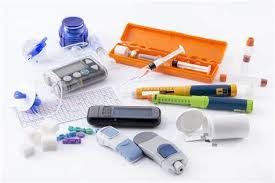
NMPA Center for Medical Device Standardization Administration released “Drug-Device Combination Products Classification Results (June 2024 to May 2025) on July 7. The document identifies 7 drug-led combination products and 46 device-led combination products.
For combination products classification procedure, please click HERE
For our white paper on combination products, click HERE
Classification Results of Imported Combination Products
Several imported products have undergone evaluation. The following products submitted by foreign companies were classified as drug-led combination products:
- QuiremSpheres 166Ho-Poly(L-lactic acid) Microspheres – Quirem Medical B.V.
- QuiremScout 166Ho-Poly(L-lactic acid) Microspheres – Quirem Medical B.V.
Additionally, one foreign-invested enterprise operating in China had its product classified as a device-led combination product:
- Pulmonary Occlusion Hydrogel – Bard Medical Technology (Shanghai) Co., Ltd.
List of Device-led Combination Products
As China Med Device, LLC focuses on devices, all combination products defined as device-led are translated into English to reflect their intended functions and compositions:
- Mechanically Enhanced Tissue-Engineered Cartilage
- Injection-grade Tranexamic Acid–Sodium Hyaluronate Composite Solution
- Cross-linked Sodium Hyaluronate–Tranexamic Acid Injection Gel
- Scalp Filling Complex with Sodium Hyaluronate for Injection
- Cross-linked Sodium Hyaluronate Composite Gel for Injection
- Ketotifen Fumarate Sustained-release Ophthalmic Lens
- Tissue-engineered Corneal Endothelium
- Recombinant Human Type III Collagen–Sodium Hyaluronate Freeze-dried Fiber
- Polynucleotide Gel for Injection
- Sterile Sodium Hyaluronate Dressing Containing Dibucaine
- Liposomal Dibucaine Wound Dressing
- Dental Ceramic Bloc
- Platelet-rich Plasma Preparation Kit
- Drug-coated Implantable High-pressure Infusion Device
- Myocardial Protection Arrest Solution with Coenzyme Q10
- Lidocaine-containing Natural Rubber Latex Condom
- Cross-linked Sodium Hyaluronate–Polynucleotide Gel for Injection
- Bionic Cartilage Matrix Gel
- Collagen Implant Containing Polydeoxyribonucleotid
- Coronary Artery Remodeling Catheter
- Transparent Sodium Hyaluronate Dressing (with Lidocaine Hydrochloride)
Classification Procedures
According to “Registration Matters related to Drug-Device Combination Products” published in July 2021, the applicant submits the drug-device combination product attribute definition application through the Drug-Device Combination Product Attribute Definition Information System to the Standardization Center (https://www.nifdc.org.cn). The following materials should be submitted:
| No. | Item | Description |
| 1 | Drug-Device Combination Product Attribute Definition Application Form | |
| 2 | Supporting Materials | |
| 2.1 | Product Description | Includes the product name, composition (dosage of included drugs), combination method, and product schematic. |
| 2.2 | Mechanism of Action | Detailed description of the mechanism of action for the combination product and its components, including primary and secondary modes of action, with supporting evidence. |
| 2.3 | Proposed Instructions for Use | If the applicant claims the product is primarily a medical device, provide a product instruction manual that meets medical device evaluation requirements; if primarily a drug, provide corresponding documentation. |
| 2.4 | Product Technical Report | A brief report on the rationale for the product’s development and the results of the research and development process. |
| 2.5 | Description of the Manufacturing Process | A brief description of the manufacturing process, including the sources of each component. |
| 2.6 | Evidence for Attribute Definition Opinion of the Application Unit | Systematic evidence for components that play a major, partial, or no role in the combination product, along with supporting materials. |
| 2.7 | Description and Regulatory Status of Related Products | Clearly specify the name of drugs/active ingredients in the combination product, suppliers, and proof of approval for sale in China or the production area. For imported products, also provide evidence of their market approval in the exporting country. If similar or related products are available, briefly introduce their details, regulatory categories, and supporting materials. |
| 2.8 | Applicant’s Commitment Letter | The applicant should commit that the attribute definition application materials are consistent with the registration application materials. |
Takeaways for Foreign Manufacturers
Foreign applicants shall pay attention to the following:
1. If the relevant content in the registration documents (such as primary materials, manufacturing process, working principle, structural composition, usage method, contact location and duration, intended purpose, etc.) is inconsistent with the classification materials or classification notification, the classification result does not apply.
2. The classification of products applying for innovative devices shall be handled in accordance with the relevant provisions of the Innovation Device Approval Procedure.
3. The announcement on registration matters related to drug-device combination products attaches the following files as annexes:
– Procedure for Classifying Newly Developed Medical Devices Not Yet Listed in the “Classification Catalog”
– Procedure for Classifying Medical Devices with Uncertain Management Categories
– Requirements for Medical Device Classification Application Materials
– Medical Device Classification Application Form (Template)
– Notification Letter for Medical Device Classification Application (Template)
– Classification Procedure for Special Circumstances
As China’s regulatory environment continues to clarify and refine the classification of combination products, the country is presenting a more predictable and transparent pathway for global innovators. Foreign companies such as Quirem Medical B.V. and Bard Medical Technology have already taken steps toward regulatory alignment, demonstrating both foresight and confidence in China’s growing medical device and pharmaceutical integration landscape.
The clear delineation between drug-led and device-led categories not only enhances regulatory efficiency but also signals China’s intent to welcome diverse and novel combination technologies. As regulatory frameworks evolve to better accommodate cutting-edge therapies, international manufacturers may find increasing opportunities to bring their advanced solutions to the Chinese market, ultimately benefiting patients and the healthcare system as a whole.