
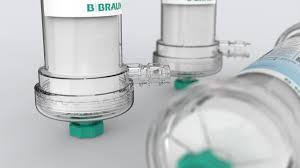
The NMPA granted innovation approval to B.Braun Avitum’s CRRT hemofilter and issued a review report.
The published review reports like this one serve as important references for you to understand what the regulatory authorities are thinking and evaluating during their review process. We have been following the list for the past several years and review the relevant ones for our clients’ specific products to gain more clarity and be more efficient in their submission and approval process. As NMPA standardizes and streamlines the review process for fast-track approval, domestic and overseas players can benefit from our expertise and experience.
Please email us at info@ChinaMedDevice.com to see if NMPA released any review report specifically for your device.
Product overview
The product is a combined kit consisting of bloodline tubing and a hemofilter fixed on a clip board. It is specifically designed for use with the OMNI continuous renal replacement therapy (CRRT) device for continuous veno-venous hemodialysis and related treatments. All kit variants share the same basic tubing configuration (arterial line, venous line, replacement fluid line, dialysate line, waste fluid line, and waste bag); differences lie only in the presence or absence of certain components.
Structure and Composition
The kit comprises tubing and a hemofilter. Tubing components include protective caps, pump tube connectors, luer connectors, sampling ports, clamps, spikes, drip chambers, filters, anti-reflux valves, pre‑flush waste bags, pump segments, warming pouches, and sensor protectors. The hemofilter consists of a polysulfone hollow‑fiber membrane, housing, end caps, sealing materials, and O‑rings. The product is ethylene oxide sterilized and for single use.
Intended Use
The CRRT hemofilter and tubing kit is intended for use with the OMNI blood purification device to perform continuous renal replacement therapy in adult patients with acute kidney injury weighing 30 kg or more.
Principle of Operation
Patient blood flows through the bloodlines into the hemofilter. Solutes cross the semipermeable membrane and exchange with dialysate, achieving solute removal. Purified blood returns to the patient via the bloodlines.
Pre-clinical
Product Performance
The applicant provided verification reports on ultrafiltration coefficient, plus studies on drip chamber filter efficiency, clearance rates, sieving coefficient, ultrafiltration rate, leachable substances, and toxicology.
Biocompatibility
The product is an externally communicating device contacting circulating blood for >24h to <30d. Biological tests (cytotoxicity, delayed hypersensitivity, intradermal reaction, pyrogenicity, acute systemic toxicity, hemocompatibility, genotoxicity, implantation, subacute toxicity) were conducted and passed.
Sterilization
Ethylene oxide sterilization. Validation reports confirm sterility assurance level (SAL) of 10⁻⁶ and acceptable residual levels.
Shelf Life and Packaging
Validation reports for shelf life, product stability, packaging integrity, and shipping simulation were provided.
Clinical Studies
The applicant used a combined substantial equivalence and clinical trial pathway. Predicate devices were the company’s own marketed disposable blood purification filter and hemodiafilter.
Comparison with Predicates
Differences: compared to Predicate 1, the subject product has thinner fiber membrane wall and smaller amplitude/wavelength. Compared to Predicate 2, intended use differs (acute kidney injury CRRT vs. chronic dialysis for acute/chronic kidney injury).
Bench Testing for Differences
– In vitro validation under simulated maximum use duration, including biological and leachable tests.
– Performance comparison: clearance rates (urea, creatinine, phosphate, vitamin B12) and ultrafiltration rates were non‑inferior or superior to predicates.
Clinical Trial Design
Prospective, multicenter, single‑arm with performance goal. Enrolled 30 sepsis patients with acute kidney injury requiring CRRT (3 sites). Treatment: CVVHDF.
Primary endpoints
– Percentage decline in clearance rates (creatinine, urea/urea nitrogen, β2‑microglobulin) at 24h vs. 1h.
– Treatment duration.
Secondary endpoints: Clearance declines at 12h, 48h, and end of treatment; overall decline rates; interleukin‑6 clearance; albumin loss; and whether a single kit meets a full CRRT session.
Efficacy
Primary endpoints (24h vs. 1h clearance decline):
– Creatinine: –2.78±56.09% (95% CI upper bound 18.16%)
– Urea/urea nitrogen: –2.02±49.19% (95% CI upper bound 16.35%)
– β2‑MG: 27.02±83.83% (95% CI upper bound 28.60%)
All met clinically acceptable limits.
Treatment duration:38.77±18.18h (max 70.95h).
Secondary endpoints: Achieved intended therapeutic targets.
Safety
– No device‑related adverse events or serious adverse events.
– 25 adverse events in 10 patients, 6 serious adverse events in 3 patients – all unrelated to device.
– No device‑related laboratory abnormalities; good filter/tubing compliance; no device defect reports.
Additional Data
Post‑market clinical data from predicate devices further supported safety and effectiveness.