
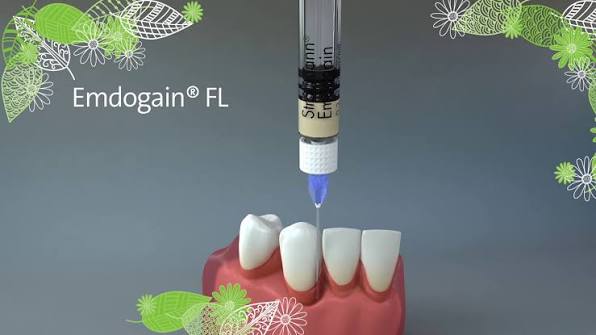
The NMPA granted innovation approval to Institut Straumann’s periodontal tissue repair material (Straumann® Emdogain®) and issued a review report.
The published review reports like this one serve as important references for you to understand what the regulatory authorities are thinking and evaluating during their review process. We have been following the list for the past several years and review the relevant ones for our clients’ specific products to gain more clarity and be more efficient in their submission and approval process. As NMPA standardizes and streamlines the review process for fast-track approval, domestic and overseas players can benefit from our expertise and experience.
Please email us at info@ChinaMedDevice.com to see if NMPA released any review report specifically for your device.
Product overview
Product Structure and Composition
The product consists of a prefilled glass syringe, an injection tip, and a gel solution contained in the syringe. The gel solution is composed of porcine-derived enamel matrix proteins, propylene glycol alginate (PGA), acetic acid, and water. The PGA component is sterilized by irradiation, while the other gel solution components are sterilized by filtration. The plunger assembly of the prefilled glass syringe is sterilized by irradiation, and the other syringe components are sterilized by ethylene oxide (EO). The final product is manufactured by aseptic processing. The injection tip is sterilized by EO and packaged separately. The sterile shelf life is two years.
The product is an absorbable implant material. It contains hydrophobic enamel matrix derivative (EMD) proteins extracted from developing porcine tooth germs, carried by PGA. The gel has a certain viscosity and is applied to exposed root surfaces during periodontal surgery.
Intended Use
The product is intended as an adjunct to flap surgery for gingival recession. It cannot replace conventional periodontal therapy.
Preclinical Studies
Product Performance Studies
The applicant conducted performance studies according to the product technical requirements. For the gel solution, tested items included appearance, weight, viscosity, pH, relative amino acid content, protein identification, protein content, total sugar content, hydrolysis products, additive residues, processing residues, trace elements, total heavy metals, and EO residues. For the prefilled glass syringe, tested items included appearance, outer flange, plunger-to-rod fit, conical tip, tip tightness, tip position, barrel tightness, barrel-to-plunger assembly fit, pH, extractable metals, readily oxidizable substances, and delivery performance. All results complied with the requirements.
The applicant also submitted product performance evaluation data, including product use studies; quantitative in vitro adsorption of porcine enamel matrix proteins onto different media surfaces; in vitro sedimentation under different temperature and pH conditions; surface morphology characterization of the self-assembled three-dimensional matrix; protein content, amino acid content, and residue content studies; pH and viscosity studies over the shelf life; composition, molecular weight, and content studies of porcine enamel matrix proteins; protein self-assembly studies using dynamic light scattering and Zeta potential characterization; in vitro enzymatic degradation; PGA degradation studies; and protein thermal stability studies. Studies on the attachment of human periodontal ligament cells to product-coated surfaces were also provided.
Biocompatibility
Because the product is an implant device with long-term contact with tissue and bone, biocompatibility was evaluated according to the GB/T 16886 series. Biological tests included cytotoxicity, oral mucosa irritation, sensitization, irritation, acute systemic toxicity, subacute toxicity, implantation reactions (subcutaneous and bone implantation), genotoxicity, and material-mediated pyrogenicity. The results met the requirements. The applicant also submitted reports on delayed-type hypersensitivity, intradermal irritation, oral mucosa irritation, acute systemic toxicity, genotoxicity, and reproductive and developmental toxicity. A three-month toxicity study of porcine enamel matrix proteins administered intravenously in rats was provided, together with chemical characterization and leachable studies and a toxicological risk assessment. Chronic toxicity and carcinogenicity were evaluated toxicologically. Toxicokinetic studies were conducted after intravenous injection and local application. The protein was degraded in vivo by enzymatic hydrolysis and macrophages; distribution and metabolic pathways in the kidneys, liver, and other organs were evaluated, with no toxicity-related findings. Absorption, distribution, metabolism, and excretion studies for the degradation products of the final product were provided. The biocompatibility risk was considered acceptable.
Biological Safety
The product is of porcine origin. The applicant provided biological safety data according to the Technical Review Guidelines for the Registration of Animal-Derived Medical Devices and conducted risk management for raw material sourcing, collection, and handling in accordance with the YY/T 0771 series. Virus inactivation validation reports and immunological risk studies were submitted, including immunotoxicity testing, residual DNA testing, and α-gal antigen testing. The manufacturing process, including two virus inactivation steps, was clearly defined, and process residue validation data were provided.
Sterilization
The PGA component is sterilized by electron beam irradiation, and the other gel solution components are filtered. The plunger assembly of the prefilled glass syringe is sterilized by gamma irradiation, and other components are sterilized by EO. The injection tip is sterilized by EO. The mixed gel solution is filled into glass syringes by aseptic processing, and the package surface is further sterilized by EO. Validation reports for irradiation sterilization, EO sterilization, and filtration sterilization for each sterilization step were submitted.
Shelf Life and Packaging
The sterile shelf life is two years. The applicant provided two-year real-time aging data at 2–8°C, stability data after natural warming during use, package integrity data, and simulated transport validation data.
Animal Studies
Animal studies included a canine periodontal defect model to evaluate safety and efficacy when the product was used alone and in combination with bone graft. Postoperative clinical observation, periodontal index assessment, gross anatomy, hematology and blood biochemistry, imaging analysis, Micro-CT, and histological and stained section analyses were used to evaluate local bone and periodontal tissue repair. The applicant also submitted studies on radiolabeled enamel matrix protein retention at periodontal sites in rats and pigs, characterizing protein retention in situ and distribution in different organs. A cynomolgus monkey oral model was used to evaluate the periodontal tissue repair capacity of different protein components and proteins in different carrier media. A dose-response study of different concentrations of porcine enamel matrix proteins was provided in long-tailed macaques.
Clinical Evaluation
Trial Design
The applicant chose the clinical trial pathway for clinical evaluation. The primary objective was to evaluate the safety and effectiveness of the product. The trial used a blinded, split-mouth, controlled, randomized design and was conducted at two centers. The planned enrollment was 40 subjects, and 42 subjects were actually enrolled. Key inclusion criteria included at least one pair of teeth with a buccal recession-type defect of ≥3 mm. Key exclusion criteria included acute infectious lesions and systemic diseases.
The split-mouth design is clinically appropriate for periodontal regenerative procedures because it controls for patient-level factors that could confound healing outcomes, such as oral hygiene, systemic health, smoking status, and biological response. Randomization and blinding further reduce selection and assessment bias. The two-center design helps evaluate consistency of performance across clinical settings and operators. Although the sample size was modest, the within-subject comparison and standardized periodontal measurements strengthen interpretability.
Endpoints and Follow-up
The primary endpoint was the change in gingival recession depth from baseline to 12 months postoperatively. The secondary endpoint was the change in gingival recession width from baseline to 12 months. Safety endpoints included adverse events. Clinical assessments captured both short-term healing and longer-term maintenance of periodontal repair. The 12-month follow-up is clinically relevant because it allows evaluation of stable soft tissue and periodontal outcomes beyond initial wound healing.
Efficacy Results
The clinical trial results showed that, after excluding outliers, the changes in gingival recession depth and width from baseline to 12 months were statistically significantly different between the two groups. These findings indicate that the test product, used as an adjunct to flap surgery, provided better clinical outcomes than the control with respect to the primary and secondary endpoints. The direction and statistical significance of the results support the claimed adjunctive use in gingival recession surgery.
Safety Results
Safety data showed that six patients experienced adverse events, including bleeding and abscess. These events are generally consistent with the expected complications of periodontal surgery and the healing process. No unexpected safety signals were identified in the trial. The applicant also submitted post-market literature and adverse event data for the product, which further support its safety and effectiveness in real-world clinical use.
Overall Clinical Conclusion
Overall, the clinical evaluation data submitted by the applicant were considered to meet the current clinical review requirements. The clinical evidence supports the product’s intended use as an adjunct to flap surgery for gingival recession, while the labeling appropriately states that the product cannot replace conventional periodontal therapy.