
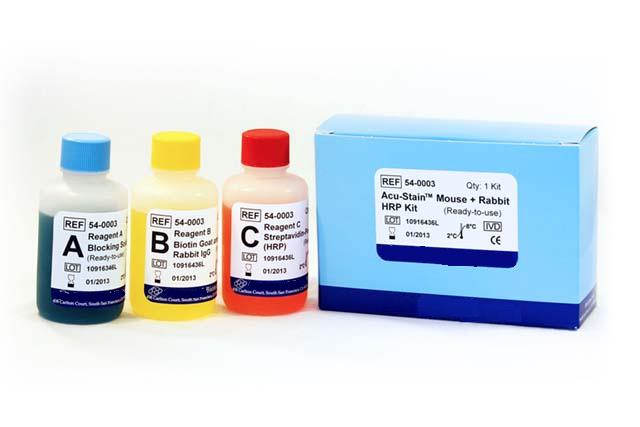
To support the implementation of the IVD Reagent Classification Catalog issued in May 2024, NMPA issued a detailed interpretive guideline specifically for staining solutions. This guidance provides regulatory clarity for foreign manufacturers seeking to register their high-quality staining products in China.
For “Clinical Evaluation Exempt Draft Catalog for In Vitro Diagnostics” issued in April 2026, please click HERE
China cuts import tariffs on 28 medical devices and IVD products in 2026. Certain diagnostic kits now at zero tariff. Click HERE for more information
Below is an official interpretation of the new classification rules, designed to help you understand how your products may fit into China’s regulatory framework.
Scope of Application
This interpretation applies to staining reagents used in clinical laboratory settings that are regulated as medical devices. These are general-purpose, sample-processing products, including reagents for:
- Histopathological staining
- Cytological staining
- Microbiological staining
These products must not contain specific substances such as proteins, antigens, antibodies, probes, or enzymes. This interpretation does not apply to products intended for research or non-medical use.
Naming Your Product
Staining solutions should be named according to their primary chemical component or a common name. For example:
- Chemical-based names: Eosin Stain, Crystal Violet Stain
- Common names: Papanicolaou (Pap) Stain, Giemsa Stain
Unless the staining target is explicitly listed in the IVD Catalog (e.g., Reticulin Fiber Stain), the name should reflect the main chemical ingredient. If a stain containing multiple components requires a target-based name, clinical guideline evidence must be provided.
Principles for Class I Classification
Staining reagents classified as Class I medical devices are general-purpose products that function through precipitation and adhesion. Key criteria include:
- No specific proteins, antigens, antibodies, probes, or enzymes
- No specific biochemical or immunological reactions (color changes must not identify a specific genus or species, such as H. pylori)
- Intended use limited to “staining only” — no claims for direct or auxiliary diagnosis of specific diseases, nor for determining disease nature or progression based on staining intensity.
Examples of Class I Staining Reagents
- Fuchsin Stain: Composed of basic violet 2, deionized water, and ethanol. Used for bacterial and human tissue staining.
- Wright-Giemsa Stain: Contains Wright pigment, Giemsa pigment, glycerol, and methanol. Used for human blood cell staining.
- Thionine Stain: Contains thionine, sodium metabisulfite, and sodium bisulfite. Used for nuclear DNA staining in human tissue and cell samples.
Products That Are NOT Class I Staining Reagents
Manufacturers should note that products with certain characteristics fall outside the Class I staining category.
(1) Bacterial/Fungal Detection
If a product contains specific binding components (e.g., antibodies to Candida mannan, Aspergillus galactomannan, cryptococcal polysaccharide, lipopolysaccharides, peptidoglycans, or binding proteins), it is not a Class I stain.
- Example: Fungal (1-3)-β-D-Glucan Detection Kit (contains acridine orange, β-D-glucan binding protein) — Class II device.
- Example: Calcofluor White Stain (CFW) (contains calcofluor white 0.1%, calcium chloride 0.05%, Triton 0.5%) — Class I device (staining of fungal cell walls only).
(2) Enzyme Activity Detection
Products containing enzyme substrates that detect activity via enzymatic reactions are not Class I stains. This includes reagents for bacterial sialidase, H. pylori urease, Chlamydia trachomatis α-mannosidase, and Neisseria gonorrhoeae specific enzymes.
- Example: H. pylori Urease Detection Kit (contains phenol red sodium salt, urea) — Class II device.
- Example: H. pylori Stain (contains Giemsa dye, glycerol, ethanol; excludes urease method) — Class I device.
(3) Inorganic Ion Detection
Reagents that detect inorganic ion concentration (e.g., calcium, zinc) using complexometric colorimetry are not Class I stains.
- Example: Calcium Detection Kit (MTB method) — Class II device.
- Example: Calcium Salt Stain (Silver Nitrate method) — Class I device (tissue staining only).
(4) Other Distinctions
- Free sulfhydryl detection (e.g., reagents containing sodium tungstate, often packaged as “HPV Virus Stain” for urine samples) — Class III device, not a Class I stain.
- Sperm morphology/DNA fragmentation/ROS detection kits — Class II devices.
- Products that include additional components like color cards to form a complete test kit (e.g., alkaline phosphatase or β-galactosidase detection kits) — Class II devices, not simple stains.
Why Register Your Staining Products in China Now?
The NMPA’s clear, detailed classification guidance eliminates previous ambiguities and creates a predictable, streamlined pathway for foreign manufacturers of histology, cytology, and microbiology stains. Here is why you should act now:
- Regulatory Certainty: The new interpretation explicitly defines what constitutes a Class I (low-risk) stain versus higher-risk categories. This reduces uncertainty, accelerates registration timelines, and lowers compliance costs.
- Fast Market Access: Class I devices require only simple filing (notification) with the NMPA, not technical review or clinical evaluation. Your products can enter the Chinese market significantly faster and at lower cost than Class II or III devices.
- Large and Growing Market: China’s healthcare system is expanding rapidly, with increasing demand for cancer screening, infectious disease diagnostics, and histopathology services. Staining reagents are essential consumables with high-volume, recurring use.
- Favorable Environment for Foreign Innovation: The NMPA welcomes international IVD products that meet quality standards. With clear rules now in place, China offers one of the world’s most attractive regulatory environments for staining reagent registration.
- Strategic Advantage: Early movers can establish brand preference among Chinese laboratories, hospitals, and pathology centers before local competition intensifies.