
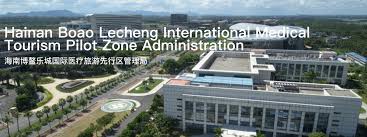
Hainan Boao Pilot Zone allows overseas unapproved medical devices, IVDs, drugs, with clinical urgency status to be used in China. It does NOT require local type testing or significant burden of proof as the national approval. While commercializing and selling their products, manufacturers can collect RWD through RWS in Hainan as local clinical evidence in China to support their national NMPA registration approval. The special program might fasten their China market access to 4 months.
Hainan Boao Pilot Zone published the “List of Drugs and Medical Devices Imported Overseas” on May 24, 2025. Since October 2020, Boao has introduced 477 drugs and medical devices, covering 28 departments including oncology, ophthalmology, cardiovascular rehabilitation, aesthetics, and diagnostics, benefiting more than 120,000 patients. For the list of devices, please email info@ChinaMedDevice.com. We can help you with feasibility study entering your devices to Hainan.
Policies Updates
The following are updates of the Hainan policies in 2025, divided into three aspects
1. Real-World Data Supporting Registration
Real-world data (RWD) refers to health-related information collected from various sources outside of traditional clinical trials, relating to patients’ health status and/or routine clinical care. With its advantages of larger sample sizes and applicability across diverse populations and medical settings, RWD can rapidly support the market entry of urgently needed drugs and devices.
In the Pilot Zone, real-world clinical data from drugs and devices already approved abroad but not yet in China can be leveraged to accelerate their domestic approval—a significant policy advantage. In June 2019, the Pilot Zone jointly launched the pilot program on the application of clinical real-world data. On February 1, 2025, the Regulations on Promoting New Biomedical Technologies in the Boao Lecheng International Medical Tourism Pilot Zone of Hainan Free Trade Port emphasized that RWD can shorten the time for biomedical technologies already approved abroad to obtain domestic market authorization.
In the field of medical devices, the Implementation Measures (Trial) for Pre-Communication on the Application of Clinical Real-World Data in the Boao Lecheng International Medical Tourism Pilot Zone, effective April 25, 2023, introduced a pre-communication service. This allows eligible applicants to participate in an initial meeting, interim guidance, and a final meeting. The document also clarified the respective responsibilities of the Center for Medical Device Evaluation (CMDE) under the NMPA, the Hainan Provincial Drug Administration, and the Pilot Zone Administration in this pre-communication process.
As a unique policy of the Pilot Zone, pre-communication helps ensure data consistency and integrity, improve data quality, and provide a reliable foundation for subsequent real-world research. Moreover, early interaction with regulators allows applicants to better understand regulatory requirements and prepare compliant data and evidence in advance, thereby accelerating the approval process for drugs and devices.
For RWD Study Design and Statistical Analysis Guideline, please click HERE
2. Taking Drugs and Devices Out of the Pilot Zone
Certain urgently needed imported drugs and devices can be taken out of the Pilot Zone by patients for self-use. This policy effectively addresses the problem that patients previously had to be hospitalized in Pilot Zone medical institutions every time they needed treatment with licensed drugs or devices. It improves accessibility and convenience, while reducing healthcare costs for the public.
The “Administrative Measures of Clinically Urgent Imported Drugs and Medical Devices Taken Out of the Hospital in Hainan Free Trade Port Boao Lecheng International Medical Tourism Pilot Zone” issued in October 2023 says the oral, topical, and subcutaneous injections of drugs and devices can be taken out when patients leave the hospital. For chronic disease patients with stable conditions and mild adverse drug reactions, the time can be up to 12 weeks.
For more information on out-of-zone policy, click HERE
3. Zero-Tariff Policy
According to the Application Guide for Qualification of Zero-Tariff Import of Drugs and Medical Devices in Hainan Free Trade Port, issued on December 20, 2024, two categories of medical products qualify for zero tariffs:
- Imported drugs and medical devices already approved for registration in China.
- Drugs (excluding vaccines) and medical devices not yet approved in China but permitted by the Hainan Provincial Government for import and use within the Boao Lecheng International Medical Tourism Pilot Zone.
On December 31, 2024, the first ‘zero-tariff’ medical devices under this policy were imported—cochlear implant devices and sound processors with a total value of 572,000 RMB ($80,423), resulting in tax exemptions of approximately 74,000 RMB ($10,413).
According to statistics released by Haikou Customs on June 20, 2025, imports have totaled 114 million RMB in value, with cumulative tax exemptions of about 15 million RMB.
To date, 14 hospitals have obtained qualification to benefit from the policy, with main applications including cochlear implant devices and accessories. For example, under the zero-tariff policy, a licensed imported medical device such as an auxiliary mechanical arm and hand for cochlear implantation with a product value of 1.5 million RMB ($16,014,400) can receive a tax exemption of about 195,000 RMB ($2,110,400) per unit.
Tax-free import also applies to universities and research institutes for experimental needs.
Can Unregistered Imported Drugs and Devices Be Used in Foreign-Owned Hospitals and Generate RWD?
Use in Foreign-Owned Hospitals
Urgently needed imported drugs and devices not yet approved in China can be used in foreign-owned hospitals established in the Lecheng Pilot Zone. According to the Application Guide for Urgently Needed Imported Drugs and Medical Devices in the Boao Lecheng International Medical Tourism Pilot Zone, applicants need only be medical institutions within the zone holding a medical practice license, without restrictions on domestic or foreign ownership. Therefore, foreign-owned hospitals set up under the Notice on Expanding Openness in the Medical Field Pilot are also eligible to apply for such use.
Use of Real-World Data
Real-world data generated from studies conducted in foreign-owned hospitals can be used as supporting materials for registration, provided they meet China’s drug and device registration requirements. The policy does not distinguish between domestic and foreign ownership.
Implications:
With their tendency and convenience to use advanced international drugs and therapies, foreign-owned hospitals can provide multinational pharmaceutical companies with more clinical application scenarios and market demand, accelerating the adoption of innovative products in China. Multinationals can collaborate with these hospitals to conduct clinical trials and R&D, leveraging high-quality medical resources and professional teams to improve efficiency and success rates. Real-world data generated from urgently needed imported devices can then be submitted as registration materials, shortening the approval timeline for such products in China.