
The NMPA issued two inspection results on July 27 and August 3, 2026 respectively to Japanese manufacturer HOYA Technosurgical and German manufacturer Eurocor Tech.
NMPA organized a remote inspection of HOYA Technosurgical’s Beta tricalcium phosphate for surgical implants, a Class III device. It was found that “the company’s quality management system has deficiencies in the validation of special processes and product inspection, and the products have quality safety hazards.”
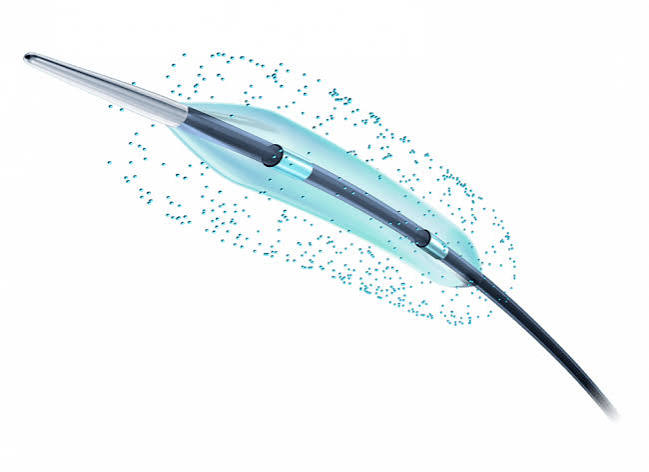
NMPA organized a remote inspection of Eurocor Tech’s paclitaxel eluting PTA balloon catheter, a Class III device. It was found that “the quality management system has deficiencies in product inspection and release review, and the products have quality safety hazards.”
The comprehensive assessment concludes that the companies do not comply with the requirements of China’s ‘Medical Device Production Quality Management Standard. As a result, the NMPA has decided to suspend the import, distribution, and use of the two devices with immediate effect.
For other inspection results, please click HERE
China Med Device Cited by RAPS on NMPA Overseas Inspection. Click HERE for the article
Click HERE for the list of devices mentioned in the 2023 National Inspection Plan
How China’s New GMP Overhaul Addresses the Deficiencies Found in HOYA Technosurgical and Eurocor Tech
The suspension of products from HOYA Technosurgical and Eurocor Tech comes at a critical juncture as China transitions to its revised Good Manufacturing Practice (GMP) for Medical Devices (Announcement No. 107, 2025), which will fully replace the 2014 framework starting November 1, 2026. While the current inspections were conducted under the existing GMP (No. 64, 2014), the deficiencies identified—special processes validation, product inspection, and release review—are precisely the areas that the new GMP elevates into standalone, prescriptive requirements with heightened enforcement expectations.
1. Special Processes Validation Under the New Validation and Verification Chapter
The 2025 GMP introduces a dedicated Validation and Verification chapter that explicitly requires manufacturers to validate critical production processes and maintain documented evidence of equivalency when changes occur. Special processes—such as sterilization, welding, casting, or any operation where the outcome cannot be fully verified by subsequent inspection—fall squarely under this mandate. The new regulation expects manufacturers to:
– Identify all special processes and perform initial validation to demonstrate that they consistently produce conforming products
– Establish revalidation protocols following significant changes in equipment, materials, or process parameters
– Maintain detailed validation records, including protocols, reports, and approval signatures, with clear audit trails
HOYA Technosurgical was cited for deficiencies in special processes validation, indicating that it failed to adequately validate certain key manufacturing steps—likely lacking documented evidence of process capability, revalidation after equipment changes, or formal change control for process parameters. Under the 2025 GMP, such a lapse would constitute a direct violation of the Validation and Verification chapter, triggering mandatory corrective actions and potential suspension even without a physical inspection.
2. Product Inspection Under the New Quality Assurance Chapter
The new Quality Assurance (QA) chapter establishes QA as a core governance function requiring lifecycle risk management supported by continuous data collection, trend analysis, and periodic management review. It also mandates structured control mechanisms for incoming, in‑process, and final product inspection, with clearly defined acceptance criteria and sampling plans.
The deficiencies in product inspection observed for HOYA Technosurgical and Eurocor Tech suggest that the companies did not maintain robust inspection procedures—possibly omitting required tests, failing to follow approved sampling plans, or lacking documented inspection records for critical characteristics. The revised regulation explicitly requires manufacturers to:
– Develop and implement comprehensive inspection protocols covering raw materials, intermediates, and finished products
– Ensure that inspection results are recorded in real time and reviewed by qualified personnel
– Use statistical techniques where appropriate and maintain traceability of each inspection lot to production records
Under the new framework, inadequate product inspection would be treated not as an isolated paperwork issue, but as a systemic QA failure that undermines product safety and regulatory compliance.
3. Release Review Under the New Quality Management and Personnel Standards
The 2025 GMP introduces more prescriptive requirements for batch release and review. The regulation requires:
– A designated release authorizer (typically the quality manager or an authorized delegate) with appropriate qualifications and experience
– A formal review of batch production and inspection records before final release, ensuring that all tests have been performed and results meet specifications
– Clear documentation of the release decision, including identification of any deviations and their disposition
Eurocor Tech’s deficiency in release review indicates that the individuals responsible for final product release failed to exercise adequate oversight—whether due to incomplete record review, insufficient authority, or lack of documented release decisions. Under the 2025 GMP, this would be a critical nonconformity, as the release review is explicitly accountable for ensuring that only conforming products reach the market. The new regulation also reinforces the independence of quality functions from production operations, meaning that any sign of compromised oversight invites immediate regulatory action.
What This Means for Overseas Manufacturers Under the Transition
The suspensions of HOYA Technosurgical and Eurocor Tech serve as a clear warning that NMPA is actively enforcing QMS compliance—even through remote inspections—and that the upcoming 2025 GMP will impose even stricter requirements in precisely the areas where these manufacturers failed. With the mandatory implementation date of November 1, 2026, overseas manufacturers should:
– Immediately review their special processes validation procedures against the new Validation and Verification chapter
– Strengthen product inspection workflows to align with the lifecycle‑based QA requirements
– Verify that release review processes meet the updated competency thresholds and have clear, independent authority for final batch disposition
The one‑year grace period is not a pause in enforcement; as seen in these cases, existing GMP rules already prohibit the deficiencies that the new GMP will further codify. Overseas firms that delay upgrades risk facing similar import suspensions, distribution halts, or even facility disqualifications.