
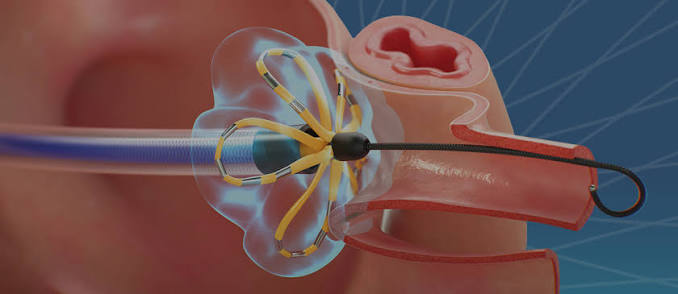
NMPA published four draft registration guidelines on June 3, 2026. Feedbacks need to be submitted by Jun 22, 2026. They are aimed at facilitating manufacturers with clarity in technical documentation, performance testing, clinical evaluation, and labeling requirements. Three of the four guidelines target Class III high-risk devices (the various ablation systems), while the endoscopic imaging guideline addresses Class II devices—yet still carries significant compliance weight due to its detailed image quality and latency standards.
- Registration Guideline on Radiofrequency Ablation Devices (Draft)
- Registration Guideline on Cardiac Radiofrequency Ablation Devices (Draft)
- Registration Guideline on Cardiac Pulsed Field Ablation Devices (Draft)
- Registration Guideline on Endoscopic Image Capture and Processing Devices (Draft)
Why Overseas Manufacturers Should Pay Close Attention
For overseas manufacturers, these registration guidelines define the technical dossier structure, bench performance tests, electrical safety standards (IEC 60601 series), and software validation expectations. If existing global documentation deviates from the new Chinese criteria—such as ablation lesion assessment, contact force monitoring, or endoscopic image latency metrics—manufacturers may face demands for supplementary testing or even rejection of registration applications. For legacy models approved years ago, manufacturers must prove during the 5-year renewal that their existing technical files still meet the stricter performance benchmarks defined in these new guidelines.
Radiofrequency ablation devices (general, non-cardiac) are widely used in liver, thyroid, and pain management procedures. The market has long been dominated by international players such as Johnson & Johnson (NeuWave), Medtronic (Covidien), AngioDynamics, and Boston Scientific. The new draft guideline clarifies requirements for electrode design validation, impedance monitoring accuracy, and animal study protocols for new ablation modes—aligning China’s registration standards with international norms.
Cardiac radiofrequency ablation devices have been dominated by Biosense Webster (Johnson & Johnson), Abbott, Medtronic, and Boston Scientific. These Class III high-risk devices require rigorous testing of irrigation tip temperature control, contact force sensing, and lesion size prediction algorithms. The new guideline explicitly demands validation data for each ablation catheter model, including bench tests under simulated cardiac motion—a requirement not always detailed in previous guidance.
Cardiac pulsed field ablation (PFA) devices represent a newer technology, with leading players including Medtronic (PulseSelect), Boston Scientific (Farapulse), and Johnson & Johnson (Varipulse). As PFA uses high-voltage electrical pulses rather than thermal energy, existing registration frameworks are insufficient. The new draft guideline introduces specific requirements for pulse waveform characterization, dielectric breakdown testing, and chronic safety studies on nerve and muscle stimulation. Overseas manufacturers must ensure their technical files include these novel test protocols to avoid delays.
Endoscopic image capture and processing devices – though Class II – are essential for minimally invasive surgery, with major suppliers including Olympus, Stryker, Karl Storz, and Pentax. The Chinese market has seen rapid growth and increasing local competition (e.g., SonoScape, Mindray). This draft registration guideline refines the comparison standards for key performance metrics including image latency (≤100 ms), color reproduction accuracy, noise reduction algorithms, and interoperability with endoscopic cold light sources. For 4K and 3D systems, additional test reports on spatial resolution and depth perception are required. Foreign manufacturers should compare their existing technical documentation against these criteria, especially for devices that combine image processing with AI-assisted diagnosis. Although Class II, non-compliance can still lead to registration rejection or renewal failure.
China Med Device, LLC has test engineers at NMPA testing centers, and seasoned clinical and regulatory staff to help you shorten your renewal or new approval time. info@ChinaMedDevice.com